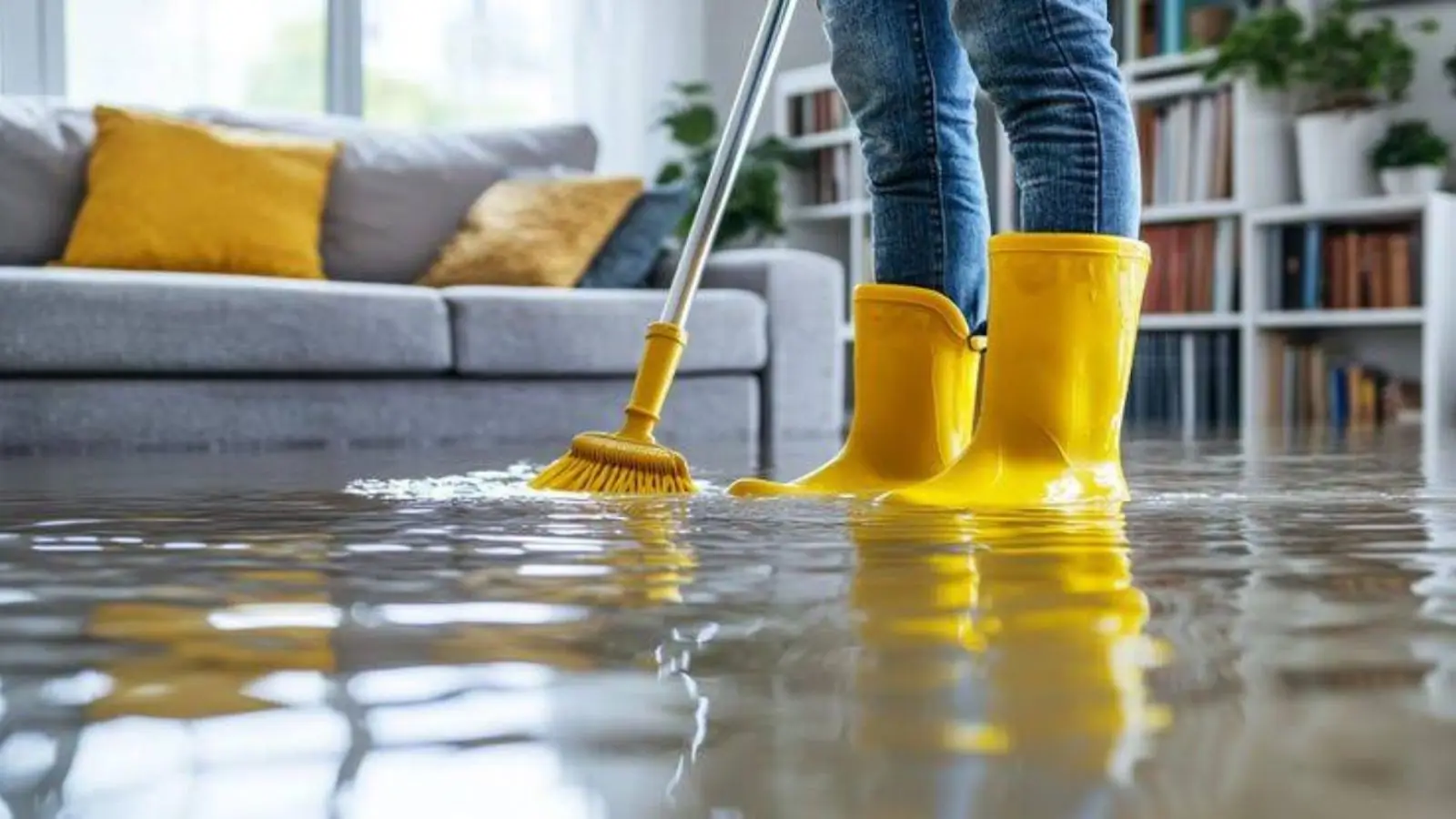
Once the source is shut off, cleanup becomes the urgent job. Wet carpet, soaked boxes, damp upholstery and standing film on floors turn into odors and mold quickly. Our 24/7 line is open, and a cleanup crew can be dispatched the same day when available. While you wait, open windows if the weather allows, lift furniture off wet floors and set aside items that are not wet.
Water damage cleanup is the removal of wet debris, damaged materials and contamination, followed by cleaning, sanitizing and deodorizing. It overlaps with drying but answers a different question. Drying asks whether the building is dry. Cleanup asks whether it is clean and safe to live in.
Safety and preparation before work begins
What to do before the crew arrives
- Stop the source if you can reach the valve safely, and keep children and pets out of wet rooms.
- Do not touch outlets, cords or appliances standing in water, and do not use a household vacuum on water.
- Wear waterproof gloves and boots if you must enter, and avoid contact with dirty or smelly water.
- Take photos of the damage and the source before anything is moved, and save damaged items for your insurer to see.
When water damage cleanup cannot wait
The water was not clean
Water from a washing machine overflow, toilet or drain carries bacteria. Contaminated materials should be removed and the area disinfected.
Belongings are wet
Books, cardboard, clothing and upholstered furniture hold water. Sorting what can be dried and what cannot is part of cleanup.
A musty smell has started
Odor is a signal that materials are still damp. Finding the damp spot matters more than masking the smell.
Visible mold spots
The EPA says mold needs moisture and that porous materials like ceiling tile and carpet may have to be thrown away if they become moldy.
What the cleanup process covers
Sort and protect
Wet and dry items are separated, furniture is lifted or moved and floors are protected.
Remove debris
Soaked padding, saturated drywall pieces and ruined contents are bagged and removed.
Clean and sanitize
Surfaces are washed and treated with products suited to the water category and the material.
Deodorize and verify
Odors are treated at the source and surfaces are checked against moisture readings.
Cleaning follows the water category. Clean water from a failed supply line needs washing and drying. Gray water from an appliance overflow needs a disinfecting step. Black water from sewage needs protective gear and disposal of porous materials. The ANSI/IICRC S500 standard for professional water damage restoration describes those categories, and you can ask any company whether its crews work to S500.
Odor control is physical, not cosmetic. Sprays and fragrance can cover a smell, but only removal of the damp material and drying remove it. Hard water can also leave white mineral film on surfaces once they dry. El Toro Water District's 2026 report lists average hardness of 236 mg/L for the Metropolitan Water District supply and 293 mg/L for the Baker plant supply, so wiping down fixtures after a leak helps.
Contents: what can be saved
Hard, non-porous items such as glass, metal and sealed plastic can usually be washed and kept. Porous items such as cardboard, particleboard and soft furnishings soak up water and are harder to save. EPA guidance says porous materials like carpet and ceiling tile may have to be thrown away if they become moldy.
Photograph everything before it is discarded. A written list with photos helps your insurer, and it helps your mutual if the loss involves a shared wall or ceiling.
| Item | Usually saved when | Usually discarded when |
|---|---|---|
| Wood furniture | Water was clean and drying began quickly | Veneer is lifting or mold has appeared |
| Upholstery | It was clean water and it can be dried within a day or two | It was contaminated water or it stayed wet |
| Books and papers | Frozen or dried promptly in small amounts | Mold has started |
| Carpet | Clean water and fast extraction | Sewage or long exposure |
| Mattresses | Rarely | Usually after any soaking |
Wet debris still in the room?
Call the 24/7 line. A crew can be dispatched the same day when available.
Cleanup in Laguna Woods Village homes
The Village was built in phases between 1963 and 1985, and the homes are called manors. Many have carpet, built-in closets and shared walls, which are the places water and odors hide. Check closets and the base of walls even if the main room looks dry.
If the loss came from a neighbor's unit or a common area, the Village's Resident Services line is 949-597-4600. Ask your mutual who handles which part. The Third and United mutual insurance disclosures describe a $100,000 master policy deductible and say owners' improvements and personal property are generally the owner's responsibility when plumbing fails, so an HO-6 condo policy is worth reading closely.
What affects the cost of water damage cleanup
- Water category. Gray and black water need disinfection and removal of porous materials.
- Area and rooms. More wet area means more labor and more disposal.
- Contents. Sorting, packing and moving contents adds time.
- Materials removed. Carpet, pad and drywall removal changes the rebuild.
- Odor treatment. Odor that has soaked into materials takes more steps than a fresh spill.
Want your real number? Call (949) 670-0939. Scope and price are explained before work starts.
Insurance is worth a short, general note. California's Department of Insurance says homeowners policies do not cover flood damage but do cover other kinds of water damage, and coverage depends on the cause. Sudden and accidental water damage is often covered, while slow leaks and neglect often are not, and flood usually needs its own policy. Check your policy or ask your insurer, because we cannot promise how any claim will be decided.
From cleanup to rebuild
Cleanup works hand in hand with water mitigation, which dries the structure, and emergency water removal, which pulls the bulk water out. When the area is clean and dry, water damage repair replaces what was removed. We also serve neighbors in Aliso Viejo with the same crews.
Water damage cleanup service map for Laguna Woods
Common questions
Yes. The dispatch line is open 24/7. A cleanup crew can be sent the same day when available. Call, describe the water, and follow the dispatcher's steps while you wait.
Drying removes moisture from the structure. Cleanup removes wet debris, cleans and sanitizes surfaces and treats odors. Most jobs need both.
Often yes for a small clean-water spill, if everything is dried within 24 to 48 hours as the EPA advises. Call a crew for dirty water, large areas, wet walls or visible mold.
Cleanup treats odors at the source, but a smell returns if materials stay damp. Moisture readings confirm that the source is dry.
Sometimes. Padding and carpet that stayed wet or touched contaminated water are often removed. Clean-water carpet caught quickly can often be saved.