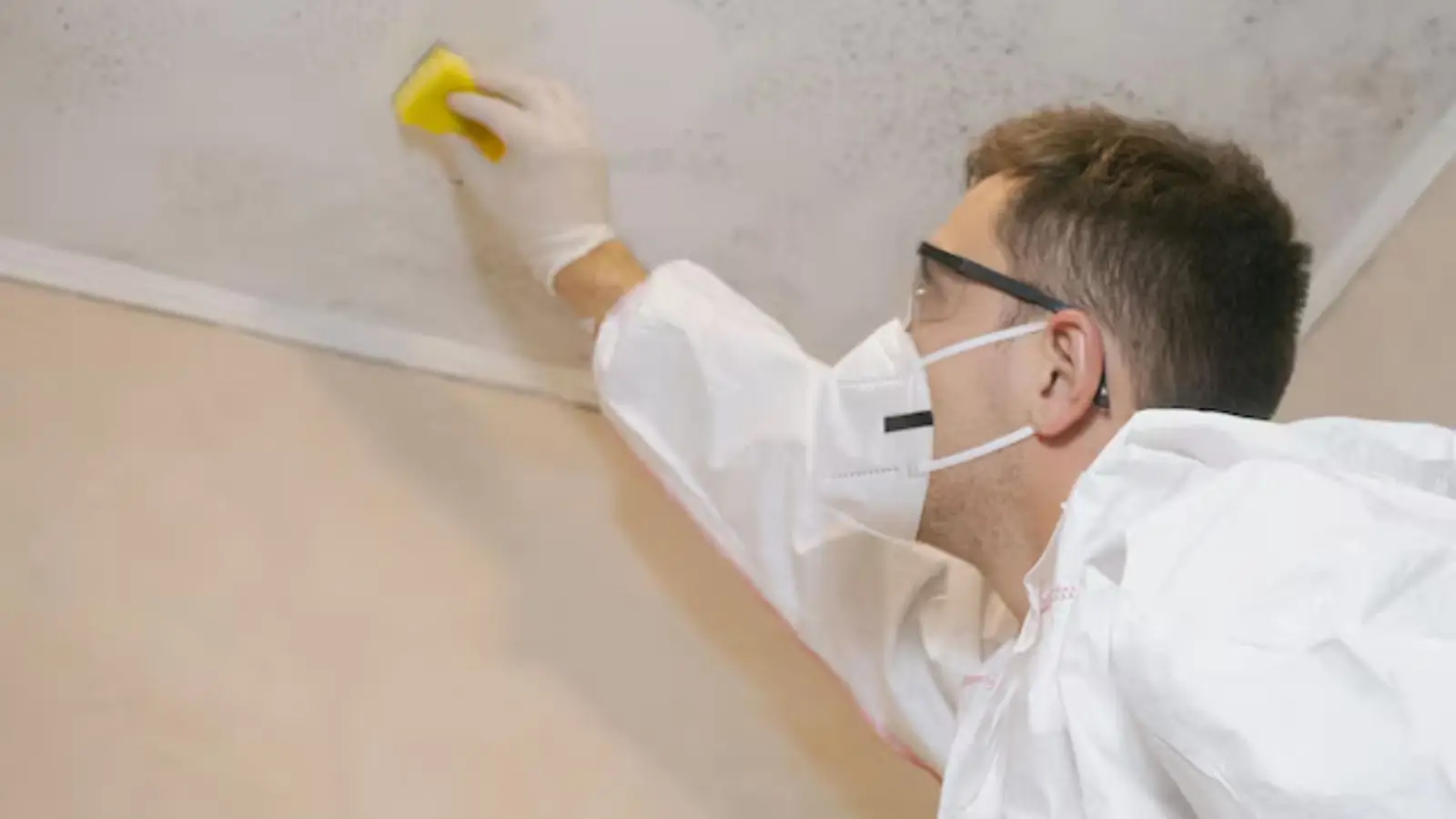
Mold needs moisture, and the EPA puts it simply: the key to mold control is moisture control. If you see mold in your Laguna Woods home, the growth is a symptom, and the cause is a leak, a damp wall or a humid room. Remediation deals with both. Our line is open 24/7 at (949) 670-0939.
Mold remediation is the containment, removal and cleaning of mold-damaged materials, followed by verification that the work is complete. The published industry standard is ANSI/IICRC S520, now in its fourth edition (2024). You can ask any company whether its crews work to S520.
Spots on the wall, a damp closet, a musty smell
People rarely search for the word remediation. They search for what they see: black spots at the corner of a shower ceiling, fuzzy growth on a closet wall after a leak, a musty smell that returns. Those are the signs that moisture has been in a material long enough for mold to grow.
If a leak came first, fix it before anything else. In our experience of reading the questions callers ask, mold is most often tied to a recent plumbing, roof or condensation problem, such as a leak under a bathroom sink or a dripping air conditioner line. Removing mold without fixing the source only buys a few weeks.
What mold remediation involves
Find the moisture
Moisture meters and a visual check trace the water source and map affected materials.
Contain
Plastic barriers and air filtration keep spores from spreading to clean rooms.
Remove and clean
Porous materials that are moldy are removed. Hard surfaces are cleaned.
Dry and verify
The area is dried and checked, and post-remediation verification confirms the work.
Cleaning method matters. The EPA advises scrubbing mold off hard surfaces with detergent and water and drying completely. The California Department of Public Health does not recommend bleach, while the CDC says it can be used in limited amounts and never mixed with ammonia. Because agencies differ, detergent and water is the common ground.
Porous materials are different. The EPA says absorbent materials such as ceiling tiles and carpet may have to be thrown away if they become moldy. Drywall that has been wet and moldy is usually cut out and replaced rather than scrubbed.
Mold after water damage
The EPA advises drying water-damaged areas and items within 24 to 48 hours to prevent mold growth. That window is why water mitigation and emergency water removal matter. If you missed the window or found mold days after a leak, remediation is the next step.
Nobody can promise that mold will not return, because moisture can return. What a good job does is remove the growth, correct the moisture source and document the area is dry.
Mold removal and black mold cleanup
Black mold is a color, not a diagnosis. The CDC describes Stachybotrys as a greenish-black mold and says all molds should be treated the same with respect to potential health risks and removal. The color does not change the plan: stop the moisture, remove the material and clean.
The EPA says areas of about 10 square feet or less, roughly a three-foot by three-foot patch, can often be handled by the household. It advises professional help for mold over that size, for significant water damage and for sewage. Health questions belong to a physician, and we do not diagnose or give medical advice.
| Situation | Usual approach | Why |
|---|---|---|
| Small spot on a hard surface, under 10 sq ft | Detergent and water, then dry completely | EPA guidance for small areas |
| Mold on drywall, carpet or ceiling tile | Material often removed | Porous materials may need to be discarded |
| More than 10 sq ft, or repeat growth | Call a professional | EPA advises professional help |
| Mold after sewage or contaminated water | Call a professional | EPA advises professional help |
Mold in your home?
Call to talk through what you see. Scope and price are explained before work starts.
Testing, clearance and selling a home
The CDC and the California Department of Public Health do not recommend routine mold testing, because there are no set standards for acceptable mold quantities and the type of mold does not change the cleanup. Some buyers' lenders still ask for documentation, and independent clearance testing after remediation exists for that reason. Ask the lender what it requires, and we cannot promise a lender will accept any result.
Independent verification is more credible when it comes from someone other than the company that did the work. S520 includes post-remediation verification in its scope.
Mold in Laguna Woods Village homes
Common spots are shower ceilings, closets against exterior walls, under sinks and around windows. The Third Mutual's damage restoration policy lists leaks from windows in rain, slab or wall leaks and excess humidity among its causes, so who is responsible depends on the cause. Ask Resident Services at 949-597-4600 before you open a wall.
The CDI says to contact your claims adjuster when mold is suspected after a leak, and that mold is usually not covered by a standard policy. Check your policy and ask your insurer.
What affects the cost of mold remediation
- Size of the affected area. Square footage is the largest driver of containment and labor.
- Materials involved. Drywall removal and replacement costs more than hard-surface cleaning.
- Moisture source. Fixing the cause may involve a plumber, roofer or HVAC technician.
- Containment needs. Barriers, air filtration and protective gear add time.
- Verification and rebuild. Clearance testing and repairs after removal are separate steps.
Want your real number? Call (949) 670-0939. Scope and price are explained before work starts.
Check your contractor too. The California Contractors State License Board lets you verify a license online or at (800) 321-CSLB, and it says the down payment on a contract is generally capped at 10 percent of the price. After mold removal, water damage repair puts the room back together.
Mold remediation service map for Laguna Woods
Common questions
Agencies disagree. The CDC says bleach can be used in limited amounts. The California Department of Public Health does not recommend it. Detergent and water, then complete drying, is what the EPA advises for hard surfaces.
The CDC and the California Department of Public Health do not recommend routine testing, and any mold you see or smell should be fixed. Testing may still be requested by a lender, so ask what is required.
The CDC says all molds should be treated the same with respect to potential health risks and removal. For health questions, ask a physician.
Mold is usually excluded from standard policies, according to the California Department of Insurance. Contact your adjuster if you suspect mold after a covered leak, and check your policy.
Clearance is best done by a third party, not the company that removed the mold. We can explain what S520 verification involves and help you find the right next step.