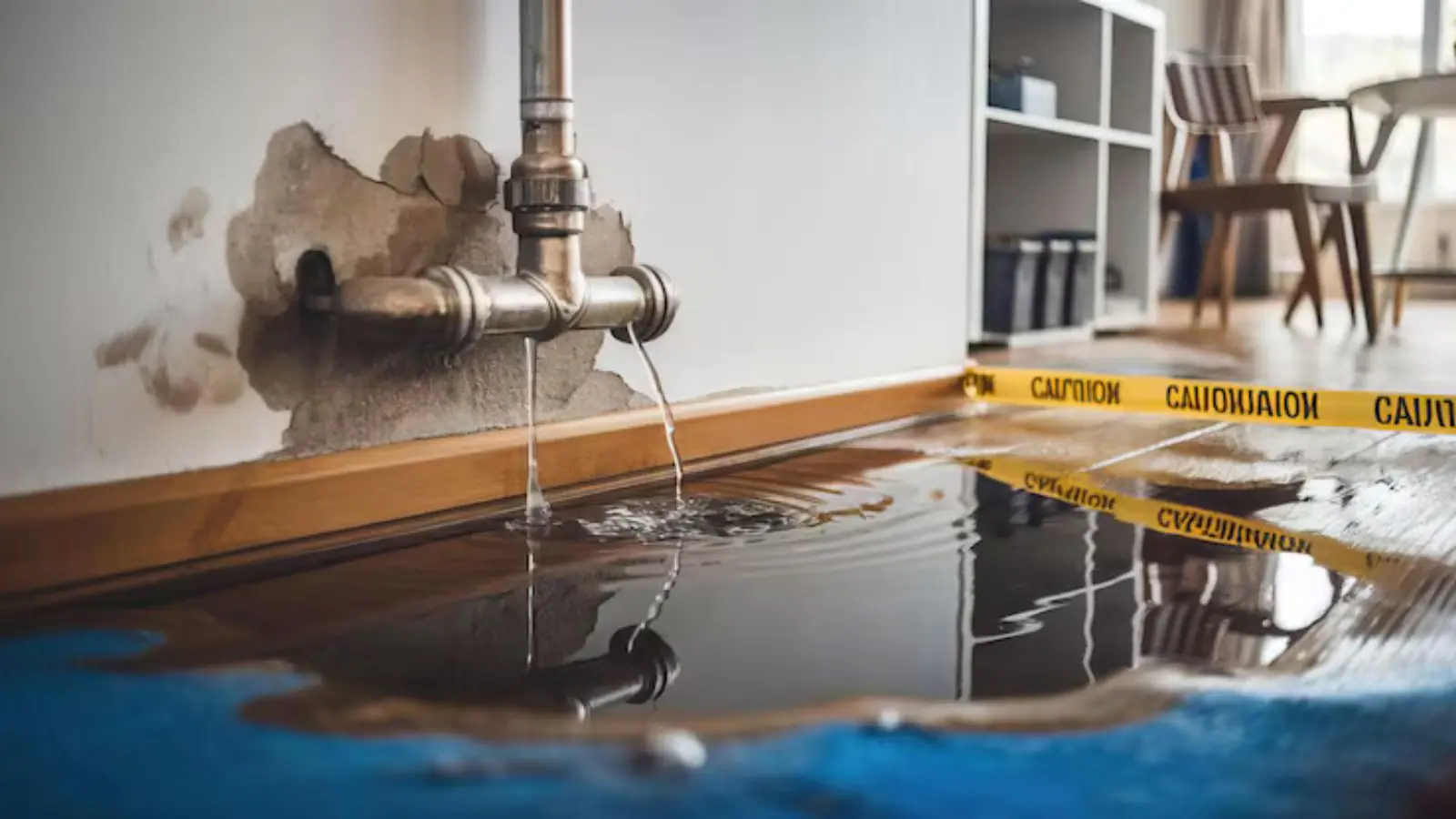
Wall water damage repair is the work of drying, and where needed replacing, drywall, insulation and finishes that a leak has soaked. For a wet wall in Laguna Woods, CA, the main question is whether the cavity behind it can dry in place or has to be opened.
A wall is a sandwich. There is paint, a paper-faced gypsum board, an air space that may hold insulation, pipes or wiring, and a second board or framing. Water can sit in any layer, and the layers dry at different speeds.
Why the cavity matters more than the paint
Paint hides almost everything. A wall can look fine while the lower edge of the board is wet and the insulation behind it is holding water against the framing.
CDPH points out that mold can grow inside walls where nobody can see it, and the EPA says the key to mold control is moisture control. That is why a professional starts with readings from a meter or thermal camera, not with a hammer.
Dry in place or cut it out: a decision table
| What you find | Likely approach | Why |
|---|---|---|
| Clean water, caught quickly, board still firm | Dry in place with air movers and a dehumidifier | Gypsum that has not lost strength can often dry without removal when readings confirm it. |
| Drywall soft, crumbling or sagging | Cut out and replace | Wet gypsum loses strength and will not hold paint or tape. |
| Wet insulation in the cavity | Open the wall and remove it | Soaked insulation holds water against framing and dries very slowly. |
| Paper facing peeling or stained from inside | Cut out the affected section | The surface bond is gone, and moisture has sat there. |
| Dirty or sewage water | Remove porous materials, professional handling | Contaminated water is not something to dry and keep. |
| Visible mold on the board | Remove and replace | The EPA says porous materials may have to be thrown away if moldy. |
FEMA's guidance, written for flood recovery, says that if wallboard is soaked you should remove it to about a foot above the water mark. That is a flood-context rule of thumb, but it shows how professionals think. Cutting a clean line above the wettest part lets you see the cavity and leaves solid board to patch to.
Insulation, baseboards and trim
Insulation
Wet fiberglass or batts that have slumped are usually removed. If the cavity opens, this is the moment to check them.
Baseboards
Pull them early. Water wicks into the bottom of the wall behind the board, and removing it lets air reach the gap.
Door casings and trim
Painted wood can often be dried and saved. Swollen or split trim is cheaper to replace than to repair.
Electrical in the wall
Outlets and switches in a wet wall should be inspected by a licensed electrician before they are used again.
Signs a wall is still wet inside
Clues you can check without tools
- A cool or clammy feel compared with the wall beside it, even when the room is warm.
- Paint that bubbles, flakes or shows a tide line a few inches up from the floor.
- Baseboards that have swelled, cupped or pulled away from the wall.
- A musty smell that grows stronger when the room is closed up.
- Soft spots when you press gently on the lower edge with a thumb.
Check the other side of the wall too. A pipe leak in a bathroom wall can show up as a stain in a closet or hallway, and a kitchen wall can hide a dishwasher or ice maker line. Looking at both faces tells you how far the water traveled.
None of these proves a problem on its own. Together they justify a reading. A moisture meter pressed to the wall gives a number you can compare with a dry reference wall in the same room, and a thermal camera shows cool patches that mark where water still sits.
If readings fall each day, the wall is drying and you may only need patience. If they hold steady or climb, water is still arriving from somewhere, and the source needs more searching.
Wall wet and you are not sure why?
A moisture map shows how far it went. Call and describe where the water came from.
From open cavity to finished wall
Confirm the source is off
No amount of drying works if the leak continues.
Open only what the readings call for
Cut neat openings, ideally straight lines on stud centers, so patching is simple.
Dry the cavity and the framing
FEMA notes that drying usually takes two to three days before rebuilding. Wood framing should read dry before it is covered.
Close, tape and finish
New board, joint compound and a primer that blocks stains.
Paint to a corner
Paint the whole wall section so patches do not show through different sheens.
Do not paint or caulk over mold. The EPA is firm on this point, and a sealed wall that is still damp can hide a problem until it gets worse. If any step is unclear, water damage repair and water mitigation cover the full scope from drying to paint, and water damage cleanup deals with debris and sanitizing when the water was dirty.
Our reach includes neighboring communities. See the pages for Laguna Hills and Laguna Beach if your property sits outside the city.
A leaking pipe inside a shared wall in the Village
In many Village buildings, walls between units are shared, and a pipe inside one may serve more than one home. Third Laguna Hills Mutual's published Damage Restoration Policy, adopted in 2017, is one local example. It says the Mutual repairs common areas, and that where the Mutual handled the underlying repair after moisture intrusion, it provides painting of the affected walls while the owner supplies the paint.
That is Third's rule, not every mutual's. United Laguna Woods Mutual and the Towers have their own documents. Before anyone cuts a wall, call Resident Services at 949-597-4600 and ask who opens it, who repairs it and who paints it, then confirm with your own insurer.
Source type: community association document
Plan the finish before you close the wall. If the wall holds a switch, an outlet or a thermostat, mark where they sit, and leave access for any shutoff valve. Matching texture on a repaired wall is easier when you keep a photo of the original surface in raking light.
On cost and coverage, repair price turns on how many feet of board come out, whether insulation was wet, the number of coats of paint and how much trim needs replacing. It is not something a web page can quote. Insurance depends on the cause, so check your policy and ask your insurer what applies.
Common questions
Sometimes. If the water was clean, the board is still firm and moisture readings fall steadily, drying in place can work. If the drywall is soft or the insulation is wet, it usually has to be opened.
FEMA's flood guidance says to remove soaked wallboard to about a foot above the water mark. A crew will use readings to set the line for your situation.
Wait until readings show the wall and framing are dry. FEMA notes rebuilding usually follows two to three days of drying, but each wall is different.
Report the leak to Resident Services at 949-597-4600 first. Under Third Laguna Hills Mutual's published policy, the Mutual paints walls it repaired after moisture intrusion, and the owner supplies the paint. Other mutuals differ, so ask yours and check your own insurance.
Check your mutual's rules and the City building department before major work. You can verify a contractor's license with CSLB at (800) 321-2752.