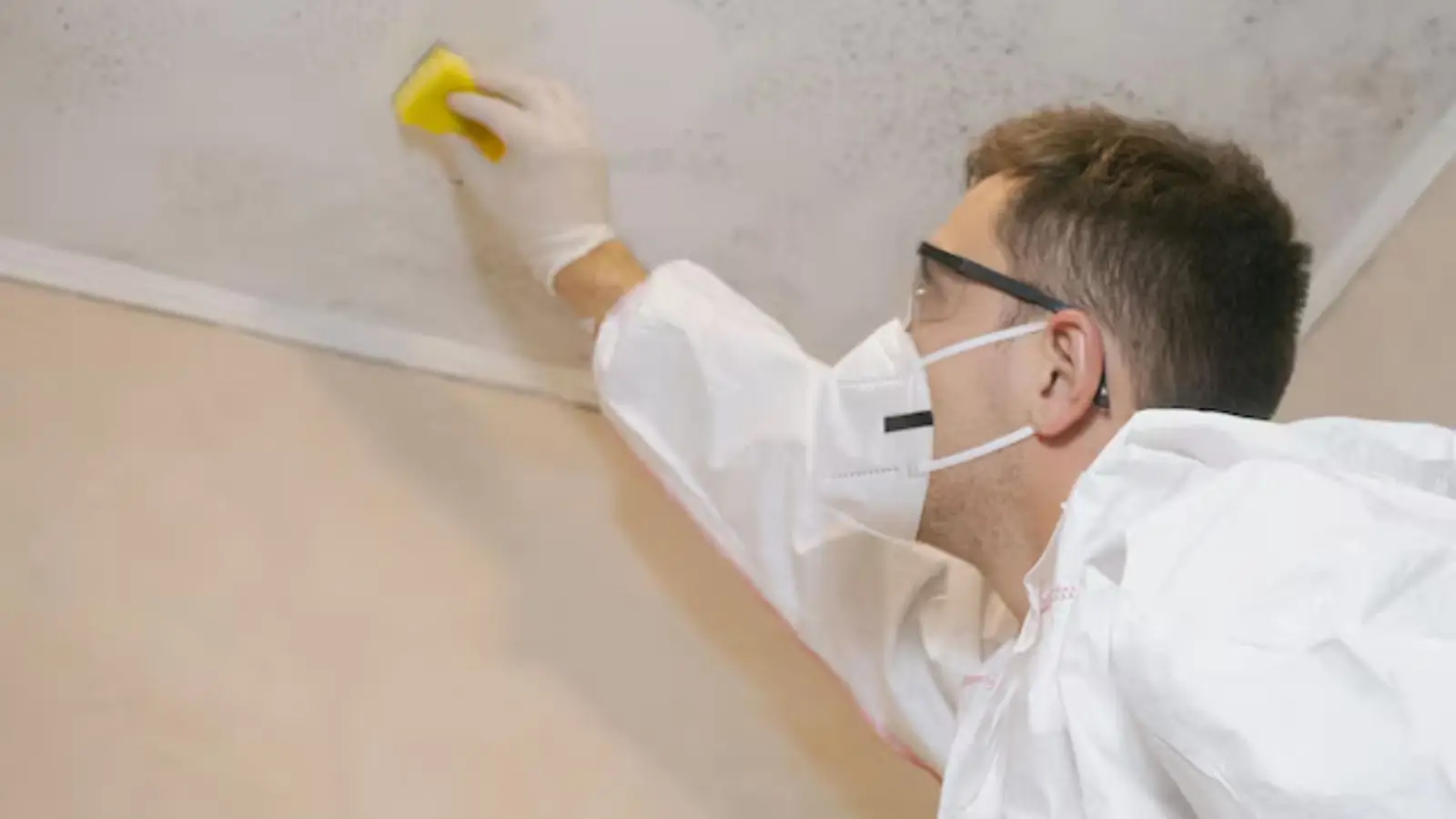
Professional mold removal services are crews that assess the moisture problem, contain the area, remove damaged materials, clean what remains and confirm the result. In Laguna Woods, CA the work usually follows a leak, a damp closet wall or a bathroom ceiling that never dries. This post walks through the job in order and explains why one job is small and another is not.
It does not cover how to choose a company, which has its own guide. It also gives no prices. A fair number comes from a written scope for your specific home.
A professional job, stage by stage
Assessment
The crew finds visible growth and traces the moisture behind it, using meters and a visual check. Mold needs moisture, so the source is mapped before anything is removed.
Containment
Plastic barriers and filtered air keep disturbed material from reaching clean rooms. The size of the containment follows the size of the problem.
Removal
Porous materials that are moldy, such as ceiling tiles, carpet or wet drywall, are cut out and bagged. The EPA notes such materials may have to be thrown away.
Cleaning
Hard surfaces that can be saved are cleaned. The EPA advises scrubbing with detergent and water, then drying completely.
Drying
Air movers and dehumidifiers bring the area down to normal moisture readings. This stage protects the cleanup from starting over.
Verification
The ANSI/IICRC S520 standard includes post-remediation verification, which checks that the work met its goals before the area is rebuilt.
Notice that cleaning is a small part of the sequence. Most of the labor is the careful removal and containment around it. A crew that rushes to the cleaning step often skipped the stage that matters.
Why two jobs that look alike differ
A spot on a bathroom ceiling and a spot on a bedroom wall can look identical from the doorway. Behind the first, there may be a failed exhaust fan and one stained drywall panel. Behind the second, there may be a slow pipe leak, wet insulation and a stud bay that has stayed damp for weeks.
That difference is why a responsible company inspects before it writes a scope. It is also why moisture mapping comes ahead of removal. Opening a wall in the wrong place wastes time, and missing the real source means the growth comes back when the area gets wet again.
Occupancy matters too. A crew working in a home where people live has to protect furniture, keep pathways clear and schedule noisy steps sensibly. Those details do not change the standard, but they change the plan.
Why testing is usually not the first step
The CDC does not recommend mold testing, and notes there are no set standards for acceptable amounts of mold. The California Department of Public Health also does not recommend testing and says the type of mold does not change what you should do. The focus is on removing the growth and correcting the moisture.
That is why a good assessment looks at the water problem, not at sampling. The ANSI/IICRC S520 standard is an industry standard for professionals, and it frames the goal as returning the area to a normal condition.
Want a written scope for your home?
Call the 24/7 line. We describe each stage in writing before work starts.
What drives the cost of a mold job
We do not quote prices on a web page, because the same word covers a patch in a closet and a ceiling with a leak behind it. These factors move the number.
- Size of the affected area. More square footage means more containment, labor and disposal.
- Materials involved. Drywall, insulation and carpet are removed, while framing and hard surfaces may be cleaned in place.
- Containment demands. A sealed bathroom is easier to isolate than a hallway that connects to living space.
- The moisture source. A fixed leak ends the problem, while a hidden or ongoing source adds investigation and drying.
- Rebuild scope. Removal leaves open walls or ceilings, and putting back drywall, paint and flooring is a separate scope.
- Access and timing. Tight spaces, occupied homes and approval steps can add time.
Want your real number? Call (949) 670-0939. Scope and price are explained before work starts.
Do it yourself, or call a professional?
| Situation | Usually a household job | Usually a professional job |
|---|---|---|
| Area of growth | About 10 square feet or less, per the EPA | More than 10 square feet |
| Water source | A small, clean, fixed leak | Sewage or contaminated water |
| Water damage | Minor and dried quickly | Significant water damage |
| Materials | Hard surfaces you can scrub and dry | Wet drywall, insulation or carpet |
If your case falls on the household side, the EPA advises scrubbing hard surfaces with detergent and water and drying them. On the professional side, a crew can start with water mitigation so the structure is dry before the mold work, and then mold remediation deals with the growth. For a larger loss, water damage repair rebuilds what was removed.
Laguna Woods: when your insurer says mold is excluded
A common surprise in Laguna Woods homes is a claim that covers the leak but not the mold that followed. The California Department of Insurance says mold is usually excluded from a homeowners policy unless you bought an endorsement, so read yours. Ask your adjuster what is and is not covered, and contact the adjuster as soon as you suspect mold.
Several things are still worth doing. Fix the moisture source, because the EPA says moisture control is the key to mold control. Keep every receipt and photograph, and ask Resident Services at 949-597-4600 how your mutual handles a source that sits in shared walls or common areas.
Source type: state insurance department guidance and community association contact
What a finished job looks like
At the end you should hold a short file: the scope, before and after photos, moisture readings that show the area is dry and the verification result. Keep it with your home records, since a buyer, a mutual or an insurer may ask for it later.
Expect open walls or ceilings to remain until the rebuild is scheduled. Nobody can promise that mold will never return, because moisture can return. What a good job does is remove the growth, correct the source and document that the area is dry.
Service areas next door
Mold work in a neighboring city follows the same stages. See our pages for Laguna Beach and Mission Viejo if your property or a family member's sits outside Laguna Woods. A written scope is the best way to compare any two jobs.
Common questions
Assessment of the moisture source, containment, removal of damaged materials, cleaning, drying and verification. The ANSI/IICRC S520 standard is the industry standard and covers post-remediation verification.
Size, materials, containment needs, the moisture source and the rebuild scope all matter. We do not quote prices online, and a written scope for your home gives the real answer.
The EPA says areas of about 10 square feet or less can often be handled by the household, with detergent and water on hard surfaces. It advises professional help for larger areas, sewage and significant water damage.
The CDC and CDPH do not recommend mold testing. The recommended path is to remove the mold and fix the moisture.
The CDI says mold is usually excluded unless you hold an endorsement. Contact your adjuster, keep every receipt, and fix the moisture source, since mold returns where water does.