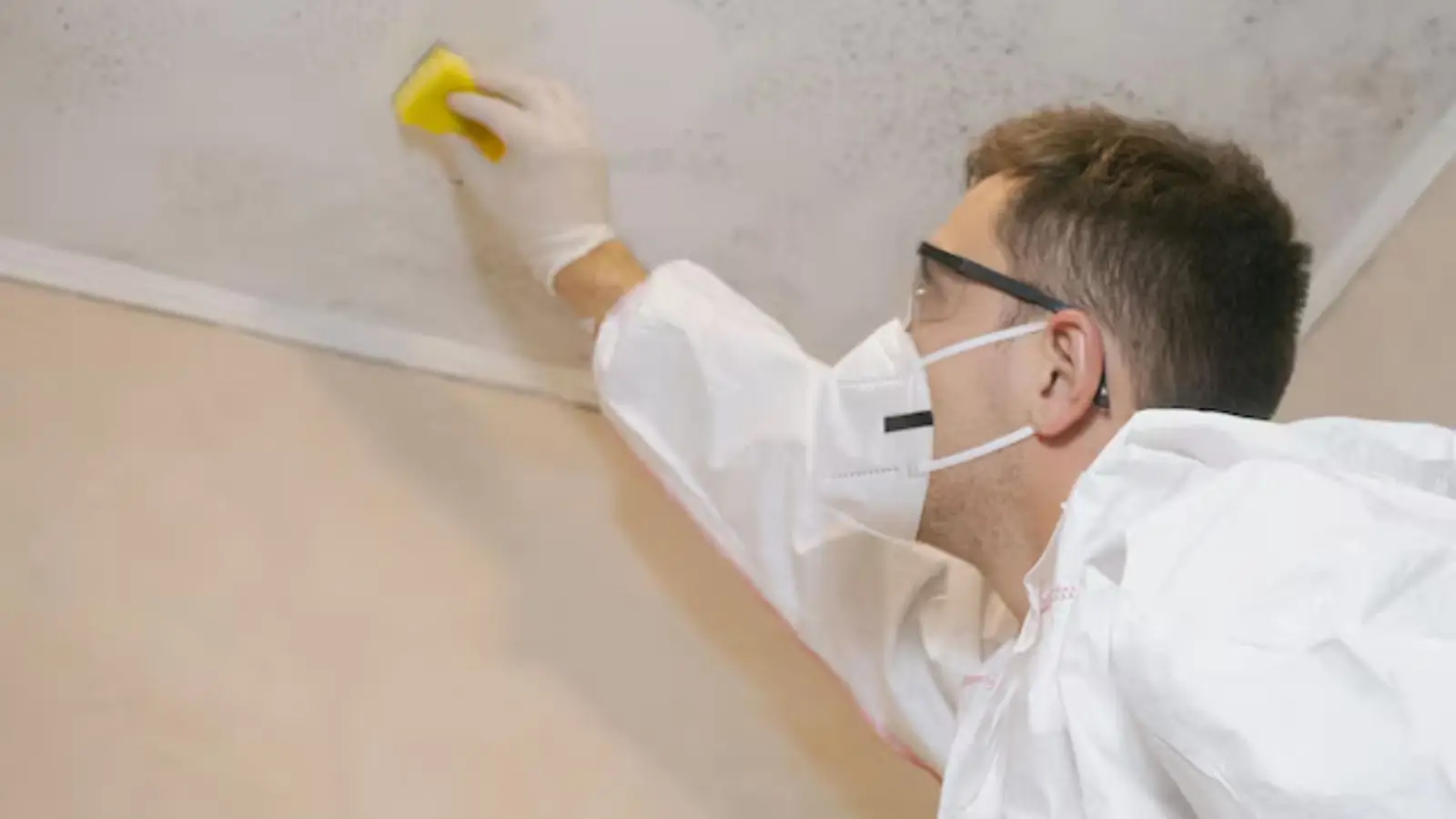
Mold on walls in Laguna Woods, CA, is growth on the painted surface or inside the drywall of an interior room, and it nearly always follows a damp spot. The location tells you a lot. A patch in a closet corner, along an exterior wall or behind a bed points to a different cause than a streak under a window.
This article covers the spots where wall mold shows up, the difference between hard and porous surfaces, when drywall must be cut out and how to tell a humidity problem from a leak. Every step starts with the same idea from the California Department of Public Health: moisture is the main factor for indoor mold.
Where wall mold likes to hide
Exterior-facing walls
A cold outer wall can stay damp when warm indoor air meets it. Rain that finds a gap around a window adds more.
Closets
Packed clothes and shut doors stop air from moving. A closet on an outside wall is the usual place to find a patch.
Behind furniture
A couch or headboard pushed flat to the wall blocks the airflow that dries it.
Inside the wall cavity
A slow pipe leak can feed mold you cannot see. A musty smell with no visible growth is the clue.
The CDPH notes that mold can grow inside walls, out of sight. So a clean-looking wall with a smell deserves a check, and it is worth moving furniture a few inches away to look at the wall behind it.
Hard surface or porous wall?
The EPA draws a line between hard and porous materials. Mold on a hard, non-porous surface can be scrubbed off with detergent and water and then dried completely. Absorbent materials such as ceiling tiles and carpet may have to be thrown away if they become moldy.
Painted drywall sits in the middle. A sealed painted surface with a light film can sometimes be cleaned, but drywall paper soaks up water and mold can root into it. If the wall is soft, swollen, stained from within or still damp, cleaning the surface will not fix it.
| Condition | What it suggests | Typical approach |
|---|---|---|
| Light film on a dry, painted wall | Surface growth, limited moisture | Clean with detergent and water, dry, fix humidity |
| Dark patch and bubbled or peeling paint | Water behind the paint | Find the source and check moisture before cleaning |
| Soft, crumbling or swollen drywall | Saturated material | Usually cut out and replaced |
| Mold plus damp insulation or framing | Moisture inside the cavity | Professional assessment and drying |
| Patch over about 10 square feet | Extensive growth | The EPA advises professional help |
When drywall has to be cut out
FEMA's mold brochure, written for flood recovery, advises removing wet or contaminated porous materials such as drywall, and says soaked wallboard should be cut out to a foot above the water mark. It also says to let the area dry, usually two to three days, before rebuilding. Mold from a slow leak is not a flood, but the principle carries over: material that stayed wet and moldy is replaced, not saved.
Cutting out drywall exposes insulation and framing, so a crew checks those with a moisture meter before closing up. If the wall is open, drying it matters as much as removing the bad section. Water damage repair then replaces the board, tapes, textures and paints.
Wall soft, stained or smelly?
Call the 24/7 line. A moisture reading can show whether the wall is wet inside.
Moisture comes before cleaning
Cleaning a wall without fixing the cause is the most common mistake. The CDPH says moisture is the main factor for indoor mold, and the EPA says mold will not grow without it. So the order matters: find the water, dry the area, then deal with the growth.
Ask yourself what changed. A new patch after a rainy week points to a window or an exterior seam. A patch near a bathroom points to steam or a pipe, and a patch that keeps spreading with no weather link suggests a leak inside the wall.
Fix the moisture, then clean
Find the source
Check windows, pipes, roof lines and the room's humidity. The EPA says to keep it below 60 percent, ideally 30 to 50 percent.
Dry the area
Run fans, open the space and use a dehumidifier. Mold does not grow without moisture.
Clean what is hard
Use detergent and water on hard surfaces and dry completely.
Replace what is porous
Remove damp or moldy drywall, insulation or similar material, as the agencies advise.
Do not paint over it
The EPA says not to paint or caulk over mold. Paint over damp mold peels and hides the problem.
Furniture, closets and everyday habits
Small habits cut down wall mold more than any product. Pull beds, couches and dressers a few inches off exterior walls. Leave closet doors cracked open or add a vent, and avoid packing a closet so tight that air cannot move. Wipe window sills when condensation forms.
Check humidity with a small hygrometer, because the number tells you more than your nose does. If a room sits above the EPA's 60 percent ceiling for days, look for the cause, whether that is drying laundry indoors, an unvented bathroom or a leak. After a water event, emergency water removal and drying within 24 to 48 hours, as the EPA advises, is what keeps mold from starting.
Exterior walls and closets in a Village manor
NOAA's 1991 to 2020 normals for the Santa Ana John Wayne Airport station, the nearest long-record station used, show about 11 inches of rain a year. January is about 2.6 inches, February about 2.6 and December about 2.0. So window and wall seams get their real test in winter, and the weeks after a storm are the time to look for damp spots on exterior walls.
The Third Laguna Hills Mutual damage restoration policy lists window leaks in rain, slab or wall leaks and excess humidity among its causes of damage. It also says the Mutual pays the insurance deductible when the source of damage is exterior to the manor, a rule that applies to Third. Which party handles a wall problem depends on the facts, so ask your own mutual and Resident Services at 949-597-4600 before you hire anyone, and contact your own insurer too.
Source type: community association document, city website, NOAA climate normals
Hiring help? The City of Laguna Woods says work valued at $500 or more needs a CSLB-licensed contractor, and you can verify a license at (800) 321-CSLB. The city also asks you to contact it before any construction or demolition, which includes cutting out walls, because HOA approval does not replace city requirements. The California Department of Insurance says mold is not usually covered by a homeowners policy, so check yours.
For help beyond the Village, our Laguna Beach and Mission Viejo pages describe the surrounding service area.
Common questions
Cold outer walls can stay damp, and rain leaks, slow pipe leaks and indoor humidity can all feed them. The CDPH says moisture is the main factor for indoor mold.
A light film on a dry, sealed wall can sometimes be scrubbed with detergent and water and dried. Soft, swollen or still-damp drywall usually has to be cut out and replaced.
The EPA says about 10 square feet or less can often be handled by the household. Bigger patches, sewage damage or significant water damage call for a professional.
It can be either. Check your room's humidity and look for leaks around windows. Third's policy lists window leaks in rain, wall leaks and excess humidity among its causes, so ask your mutual and Resident Services which applies to you.
The CDC and the California Department of Public Health do not recommend testing. The type of mold does not change what you do.