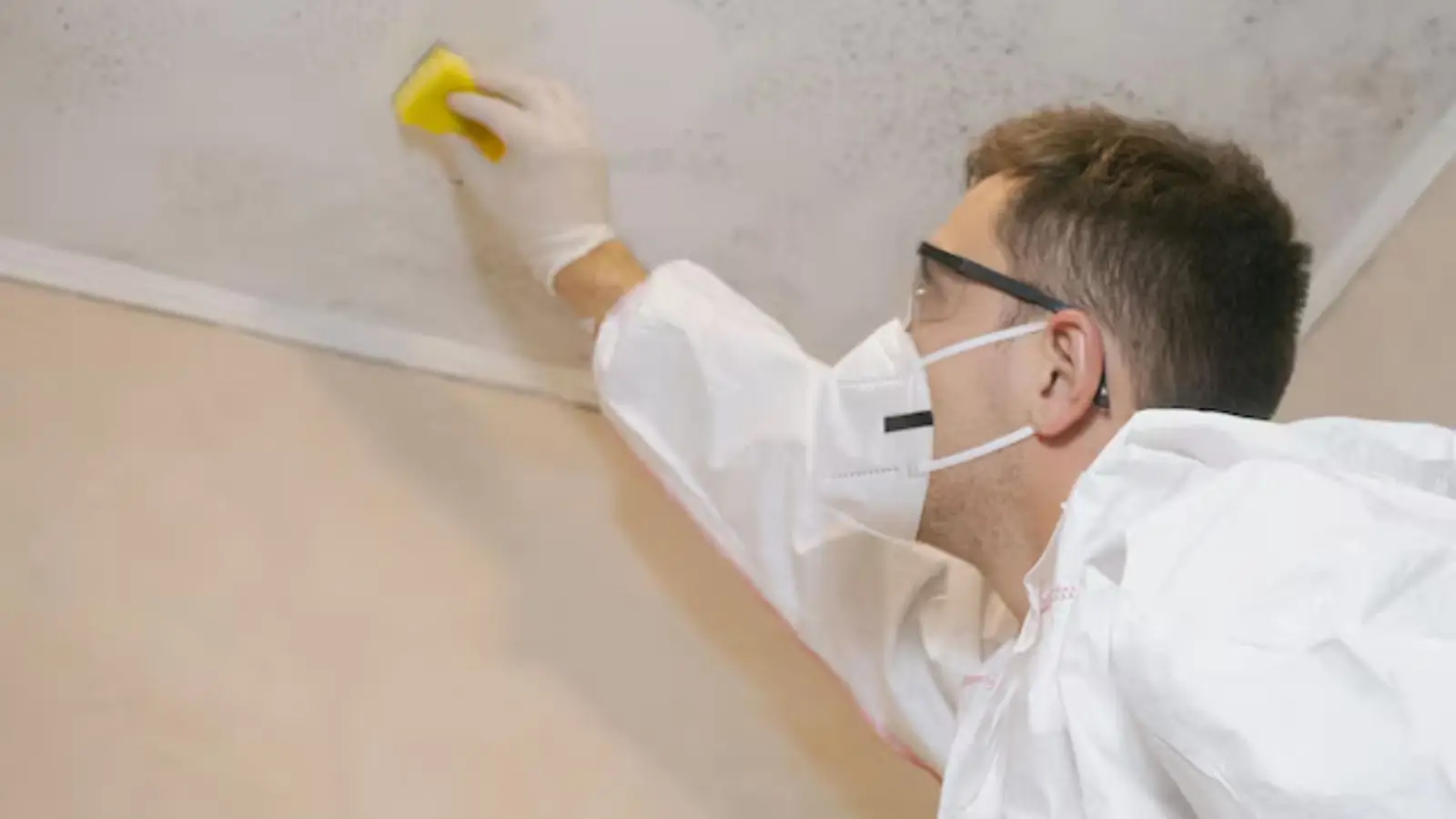
Mold in carpet after water damage is fungal growth on the carpet fibers, backing or pad that begins when the material stays wet. In a Laguna Woods, CA home, a leak from a water heater, a washing machine hose or the unit above can start the clock on wall-to-wall carpet fast.
The good news is that carpet is not always lost. The harder news is that the pad underneath nearly always is, and mold cannot grow without moisture.
Why carpet is a high-risk material
Carpet is porous. Water moves through the fibers into a backing and a foam or fiber pad, and the pad holds moisture like a sponge long after the surface feels dry.
The EPA states that absorbent or porous materials, such as ceiling tiles and carpet, may have to be thrown away if they become moldy. That is the standard to hold in mind when you decide what to do.
The 24 to 48 hour window
Hour 0: stop the water and extract
Use a wet-dry vacuum rated for liquids to pull water from the surface.
Hours 1 to 12: lift and ventilate
Open windows if the air outside is drier, and run fans and a dehumidifier.
By hour 24: pad assessment
A wet pad should be lifted and checked. It often has to be discarded.
By hour 48: the EPA mark
The EPA says to dry water-damaged areas and items within 24 to 48 hours to prevent mold growth.
After 48 hours: expect a harder call
Wet carpet that has sat longer carries a higher risk of growth and odor.
These hours are a guideline, not a switch. Clean water in a cool, ventilated room gives you more time than warm, still, humid air does. The point is to act early, not to wait for the exact mark.
Save it or discard it? A table to sort the carpet
| Situation | Carpet | Pad |
|---|---|---|
| Small clean-water spill, dried within a day | Often saved | Often saved if dried, but check |
| Clean water, soaked through, caught inside 48 hours | May be saved with professional drying | Usually replaced |
| Wet more than 48 hours, no visible mold | Uncertain, expect to replace | Replace |
| Visible mold or musty smell | The EPA says it may have to be thrown away | Discard |
| Dirty or sewage water | Discard | Discard |
FEMA's mold brochure, written for flood recovery, tells people to discard soaked or moldy carpeting and repeats the saying, when in doubt, throw it out. That advice comes from a flood context, where water is often contaminated, so it is stricter than what a short, clean pipe leak needs. It is still a useful signal that carpet is a material to be careful with.
Carpet soaked or smelling musty?
Call and describe how long it has been wet. A crew can check the pad and subfloor.
Do you need to know the type of mold?
No. The CDC does not recommend mold testing, and the California Department of Public Health says there is no evidence that the particular kind of mold matters. Both say what counts is that growth is found and the moisture behind it is fixed.
Health questions are for a physician, not for a web page. What a page can say is that mold needs moisture and that the fix is drying, removal of what cannot be cleaned and repair of the source. Professionals who do this work often follow the ANSI/IICRC S520 standard, which is an industry document about remediation procedures.
What happens under the carpet
The pad is only one layer. Under it sits a tack strip along the walls, then the subfloor, which may be a concrete slab or a wood floor system, depending on the building.
Water that soaks the pad drains downward and outward, so the edges along the baseboards stay wet longest. That is why a crew will often lift a corner of the carpet, check the tack strip and take a reading at the bottom of the wall. A carpet that feels dry in the middle of the room can still be wet at its edges.
Ask the crew about the subfloor too. If the pad stayed wet for days, the surface below it needs drying and checking before new pad goes down. Installing fresh carpet over a damp base simply restarts the problem, and it may void the carpet maker's own installation terms.
Smell is the other clue. A musty or earthy odor after a leak tells you moisture is still present somewhere, even when you cannot see a cause. Do not mask it with air fresheners or powders, because the smell will come back until the source is dry.
What not to do
- Do not spray bleach on carpet. CDPH does not recommend it, and the CDC says it can be used on some surfaces with care, so the agencies do not agree. Soap and water on hard surfaces is the EPA approach.
- Do not cover wet carpet with a rug or plastic, which traps moisture.
- Do not use a household vacuum on wet material.
- Do not keep walking on a soaked carpet, since that presses water into the pad and subfloor.
When mold is already visible, mold remediation deals with it, while water damage cleanup and water mitigation cover the extraction and drying that come before. We also serve nearby areas such as Laguna Hills and Lake Forest.
Damp carpet and the Laguna Woods climate
The nearest long-record NOAA station, Santa Ana John Wayne Airport, shows about 11 inches of rain a year for 1991 to 2020, with January, February and December the wettest months. That is not much rain, so most carpet floods in the Village come from plumbing and appliances, not storms.
If you have wall-to-wall carpet near an exterior door or window, check it after the winter rains. Report any leak from above to Resident Services at 949-597-4600.
Source type: federal climate data and community association document
A final practical point is timing of the cleanup itself. Document the carpet with photos and a few clipped samples before it goes to the curb, since an adjuster may want to see what you discarded. Keep a note of the date the water started and the date drying equipment went in.
On insurance, the California Department of Insurance advises that if you suspect mold after a leak, you should contact your claims adjuster right away. Mold is usually excluded, so the cause of the water matters. Keep receipts for drying and ask your insurer what applies. The price of carpet work depends on how much is wet, how long it sat, what the pad is made of and how big the room is.
Common questions
The EPA says to dry water-damaged areas and items within 24 to 48 hours to prevent mold growth. Growth is not certain on hour 49, but the odds worsen the longer carpet and pad stay wet.
Light surface growth on a small piece is sometimes treated, but the EPA says porous materials like carpet may have to be thrown away if they become moldy. A professional can advise on your case.
No. The CDC does not recommend testing, and CDPH says the kind of mold does not change what you should do. Dry the area and remove what cannot be saved.
The California Department of Insurance says a condo unit-owner policy covers damage to the interior of the unit, while the association generally insures the structure and common areas. Whether carpet counts depends on your policy wording, so confirm it with your own insurer and read your mutual's disclosure.
Usually yes. The pad soaks up water and dries slowly, and a pad that stayed wet is among the first things a crew removes.