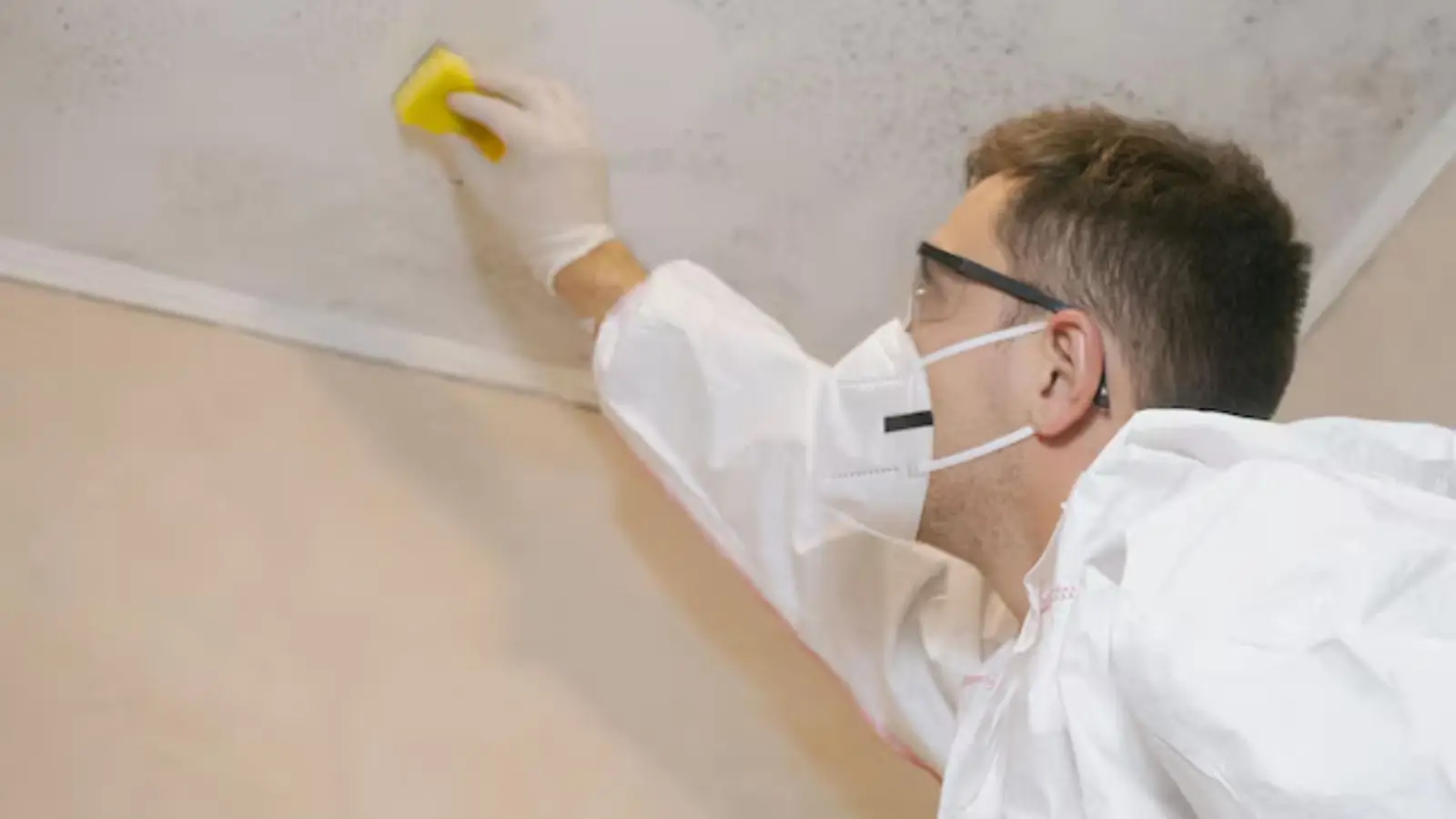
Removing black mold in Laguna Woods, CA, means taking the growth off a surface, drying the area and fixing the water that fed it. The CDC describes the species behind the name, Stachybotrys chartarum, as a greenish-black mold and says all molds should be treated the same with respect to removal. So the steps for a small patch are the same whatever color you see.
This guide is for a small area only. If you are unsure about the size, the surface or the cause, stop at step one and call.
Before you start: size it up
The EPA's rule of thumb is about 10 square feet, roughly a three-foot by three-foot patch. Areas that size or smaller can often be handled by the household. Mold over that size, mold after significant water damage and mold after sewage call for a professional.
Measure by eye with a tape if you need to, and look at the surface too. Mold on tile, metal or sealed concrete is a cleaning job. Mold on carpet, ceiling tile or soft drywall is likely a replacement job.
The removal steps for a small area
Protect yourself
Follow the protective equipment guidance the EPA and CDC publish for mold cleanup, and keep it on the entire job. If you cannot meet that guidance or you are unsure, stop and call a professional.
Isolate the area
Close the door to the room, keep other people and pets out and avoid spreading dust. Keep the work contained to the room as far as you can.
Scrub hard surfaces
Use detergent and water, as the EPA advises. The California Department of Public Health points to soap and water for non-porous materials.
Dry completely
Dry the surface and the air around it. The EPA stresses drying completely, because a damp surface invites regrowth.
Discard what is porous
The EPA says absorbent materials such as ceiling tiles and carpet may have to be thrown away if they become moldy.
Fix the cause
Mold will not grow without moisture. Find the leak or humidity source and correct it.
A word on what to leave out. Do not paint or caulk over mold, since the EPA says to clean and dry first. And do not mix cleaning products. Bleach is where the agencies differ, with the CDC saying it can be used in limited amounts and never mixed with ammonia, and the California Department of Public Health not recommending it. Detergent and water avoids the argument.
Stop and call if you notice any of these
The area is larger than about 10 square feet, or you keep finding more as you clean. The wall or ceiling is soft, swollen or wet, or the damage came from sewage. You cannot find the source of the water, or you are not comfortable doing the work with the protective gear described by the agencies.
Not comfortable doing this yourself?
That is a sound reason to call. Describe the area to the 24/7 line.
What to do with the debris
Porous items that were moldy are thrown away rather than cleaned, as the EPA describes for ceiling tiles and carpet. Handle them as little as you can and take them out of the room without dragging them across clean areas.
After the clean-up, watch the area for a few weeks. A patch that returns means the moisture is still active, and a second round of scrubbing will not hold. At that point a moisture assessment is the next step, and water mitigation covers drying a wet structure.
Keeping it from coming back
Removing mold is half the job, and the other half is keeping the surface dry. The EPA advises keeping indoor humidity below 60 percent, ideally between 30 and 50 percent, and says the key to mold control is moisture control. A cheap hygrometer in the room tells you where you stand.
Run the bathroom fan during and after showers, fix drips under sinks promptly and dry any wet item within 24 to 48 hours, the window the EPA gives for preventing mold growth. If you see a stain spreading on a ceiling or wall with no obvious cause, assume a hidden leak until a moisture reading says otherwise.
Keep a short note of the date you cleaned, the size of the patch and a photo. If the same spot returns, you will have a record for Resident Services, your insurer or a professional.
Why a quick wipe is not enough
Mold that is wiped but not dried, or cleaned without fixing the leak, usually returns. Drying is the step people skip, since a surface can look clean while the material underneath is still damp. The EPA stresses complete drying for exactly this reason.
If a room still smells musty after you have cleaned and dried the surface, the growth may be somewhere you cannot see, such as inside a wall. That is a signal to get a moisture reading, not to scrub harder.
What a professional does differently
A professional job begins with locating moisture and defining the affected area, then containing it so spores and dust do not travel. Damaged materials are removed, surfaces are cleaned and the area is dried and checked. The industry standard is ANSI/IICRC S520, which covers procedures and post-remediation verification, and you can ask a company whether it works to that standard.
The EPA advises hiring a contractor with mold experience and checking references. The California Contractors State License Board lets you check a license online or at (800) 321-CSLB, and the City of Laguna Woods says work of $500 or more needs a licensed contractor. Our mold remediation page lays out the whole process.
Mold on a wall shared with a neighbor in the Village
A manor or condominium often shares a wall with the next unit, and the Village's insurance disclosures for Third and United both say that interior damage from plumbing failure in your unit or a neighbor's is generally the owner's responsibility. Third's damage restoration policy also says that responsibility depends on the facts in some cases. So who cleans a shared-wall patch is not something to guess at.
Call Resident Services at 949-597-4600 and ask whether the wall is yours, your neighbor's or the mutual's. Tell your neighbor too, since moisture may be coming from their side. For insurance questions, Third lists Risk Management at 949-597-4202. Photograph the patch before you clean it.
Source type: community association document, city website
Outside the Village, the same steps apply, and our pages for Laguna Hills and Aliso Viejo cover the surrounding service area. Health questions about mold belong to a physician, and the California Department of Insurance says to contact your adjuster if you suspect mold after a leak.
Common questions
The EPA says about 10 square feet or less can often be handled by the household, using detergent and water on hard surfaces and drying completely. Larger areas or sewage damage call for a professional.
The CDC says bleach can be used in limited amounts and never mixed with ammonia. The California Department of Public Health does not recommend it. Detergent and water is the option both can accept.
Follow the EPA and CDC guidance on protective equipment for mold cleanup. If you cannot meet it, or you are unsure, call a professional.
Ask Resident Services at 949-597-4600. The answer depends on the wall, the source and your mutual's rules, and we cannot decide it for you.
The CDC and the California Department of Public Health do not recommend testing. The type of mold does not change the removal steps.