Condo insurance coverage for water damage is the split between two policies: the one you own for the inside of your unit and the one your association carries for the building. If a pipe fails in your Laguna Woods, CA home, the first question is not how much but whose policy answers. The answer depends on the cause of the water and on the wording of both policies.
This post explains the usual split using the California Department of Insurance (CDI) and the published disclosures of two Laguna Woods Village mutuals. It is general information, not advice on your policy. Insurance rules differ by company and by mutual, so your own documents come first.
Two policies, one leak
The CDI says a condo unit-owner policy covers your personal property and damages to the interior of the unit. It also says the condominium association generally buys insurance for the building structure and common areas. Many people call the unit-owner policy an HO-6. That is the common name for it, and the Village mutuals use it when they recommend the coverage, but the CDI guide itself does not.
Loss assessment coverage is a third piece. If the association's own policy falls short or a deductible is spread across owners, a loss assessment add-on to your policy may help pay your share. Ask your agent if yours includes it and at what limit.
| Item | Usually your unit-owner policy | Usually the association policy |
|---|---|---|
| Personal property such as furniture and clothing | Yes, up to your limits | Generally no |
| Interior finishes, flooring and cabinets you own | Often, depending on the policy and the association's rules | Depends on the governing documents |
| Building structure and common areas | Generally no | Generally yes |
| Share of a master policy deductible or assessment | Possibly, if you carry loss assessment coverage | The association sets how it is charged |
| Temporary housing while the unit is repaired | Possibly, if you carry loss of use coverage | Often not |
Treat the table as a map of questions, not answers. Governing documents change who owns what inside a wall, and some associations insure the unit as originally built while owners insure everything added afterward. Read the declarations page of your own policy and the insurance section of your association's documents together.
Three situations, walked through
Picture a supply line that snaps under your kitchen sink on a Saturday. The water is sudden, it reached your cabinets, flooring and rugs, and the damage sits inside your unit. That is the situation the unit-owner policy is built for, subject to your deductible and limits.
Now picture a pipe inside a shared wall that has wept for months and stained the drywall on both sides. Here the seepage language matters, and so does who owns the wall. Your insurer may treat the slow leak as excluded, and the association may treat the wall as common area, so you could be sent between two offices.
Last, picture a roof leak that wets the building structure and drips into your bedroom. The structure is generally the association's to insure, while your belongings and interior finishes are generally yours. Neither policy is a substitute for the other, which is why the paperwork should be settled before the water arrives.
The cause of the water decides a lot
Sudden and accidental
The CDI lists sudden and accidental water damage, such as a burst pipe or an overflow, as typically covered. This is the cause most claims rest on.
Seepage and slow leaks
Water damage from seepage or leaks over time is generally not covered. A drip under a sink that ran for months reads very differently from a supply line that snapped.
Mold
Mold is usually excluded unless you bought an endorsement. If mold shows up after a leak, tell your adjuster before you start any cleanup.
Flood and wear
Flood and wear and tear are usually excluded too. Flood needs its own policy, and wear is treated as maintenance rather than a loss.
A long record of small problems can hurt a later claim. Fixing a dripping valve early and keeping the receipt is cheap. It also shows you acted promptly, which the CDI says matters because policies expect reasonable steps to limit further damage.
Wet floor or ceiling in your condo?
Call the 24/7 line. We photograph and document the work so you have records for your insurer.
Laguna Woods Village: what the mutuals publish
Laguna Woods Village has more than one housing corporation, and each publishes its own insurance disclosure. Third Laguna Hills Mutual and United Laguna Woods Mutual both state a $100,000 per-occurrence deductible on the mutual's master policy. For a plumbing failure in your unit or a neighbor's, both say repair of the owner's improvements and personal property is the owner's responsibility. That means new flooring or cabinets you installed are likely your claim, not the mutual's, so your own policy matters.
Third strongly recommends an HO-6 policy, and United says members should buy one covering liability, personal property, additions and alterations, loss of use and loss assessment. Third also states that loss of use, meaning temporary housing, is the owner's cost and that assessments continue during repairs. If you live in either mutual, ask Resident Services at 949-597-4600 which document applies to your building.
Only the Third and United disclosures were read for this post. Other Village corporations, including the Towers, may word things differently, so read yours.
Source type: community association insurance disclosures
Questions to put to your agent before a loss
Ask these now, while nothing is wet
- What is my deductible for water damage, and does it differ for a master policy assessment?
- Do I carry loss assessment coverage, and at what limit?
- Does my policy cover alterations and improvements I made, such as new flooring or cabinets?
- Is there loss of use coverage for temporary housing, and how many days does it run?
- Do I have a mold endorsement, and what does it cover?
- What does the policy say about seepage and slow leaks?
After the water stops
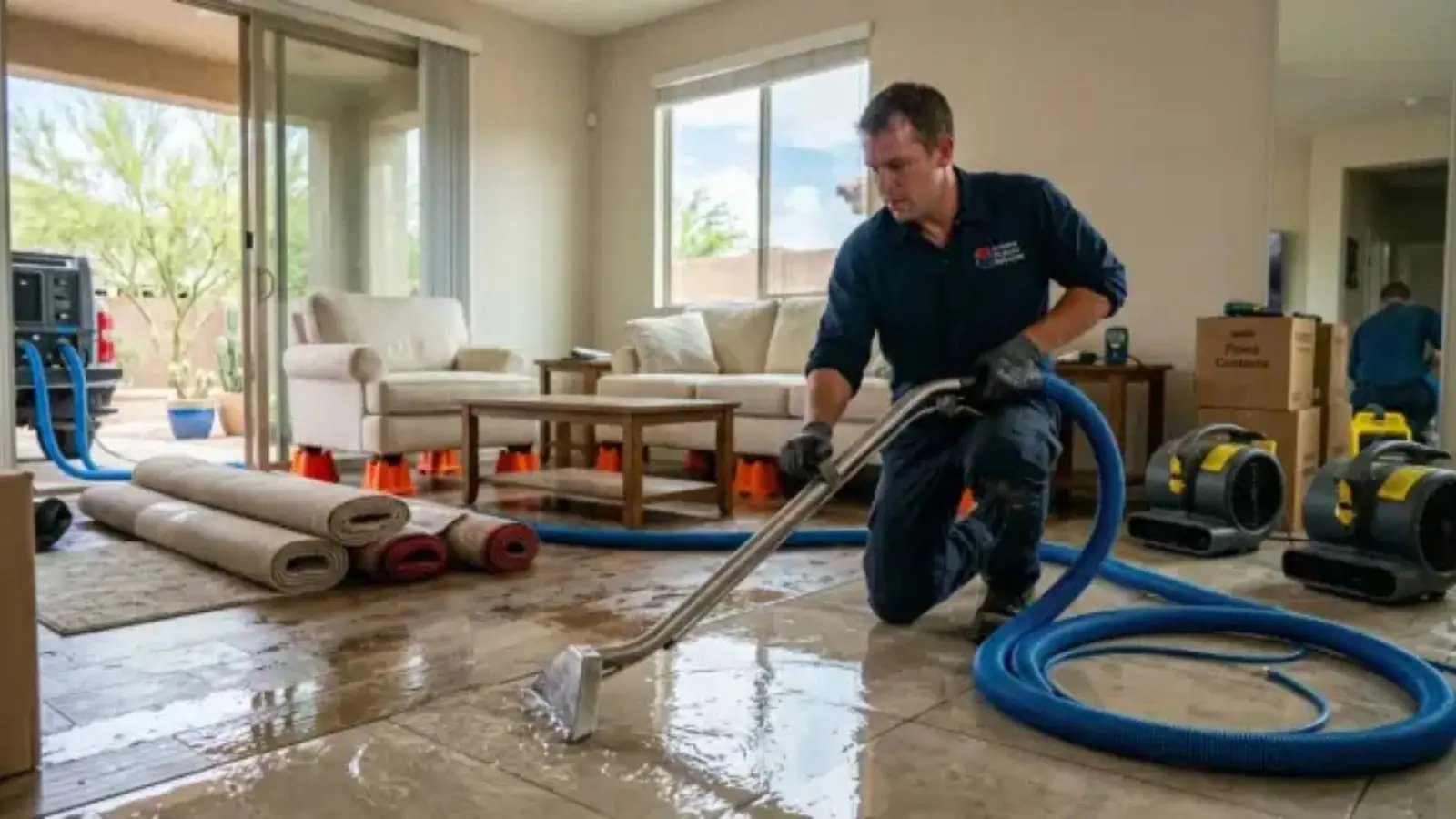
Whatever the policy says, the building still has to dry. The EPA advises drying water-damaged areas and items within 24 to 48 hours to prevent mold growth, so the first call is often a crew rather than an adjuster. Water mitigation records, including moisture readings and photos, give your insurer something concrete to review. Keep every receipt.
Cleanup and rebuild come after drying. Water damage cleanup removes ruined materials, and water damage repair restores walls and floors. We cannot say how any claim will be decided, because that rests with your insurer and your policy.
Neighbors outside the Village face the same split. Condo owners in Laguna Hills and Aliso Viejo deal with their own associations, and the same reading exercise applies there.
Common questions
Often, when the cause is sudden and accidental. The CDI says sudden and accidental water damage is typically covered, while damage from seepage or leaks over time is generally not. Mold, flood and wear and tear are usually excluded. Your policy language decides, so read the declarations and exclusions.
Per the CDI, it covers your personal property and damages to the interior of the unit, and it usually offers loss assessment coverage. The association generally insures the building structure and common areas. The exact line depends on your governing documents.
HO-6 is the common name for a condo unit-owner policy, and the Village mutuals recommend carrying one. The CDI condo guide does not use that term, so if you ask your agent for a unit-owner policy, you will get the same thing.
It depends on your mutual, so read its disclosure. Third and United both publish a $100,000 per-occurrence master policy deductible and put the owner's improvements and personal property on the owner when plumbing fails. Third also lists loss of use as the owner's cost. Ask Resident Services at 949-597-4600 which rules apply to you.
In the Village disclosures, a loss under the deductible is generally handled without the master policy, which is why owners are told to carry their own coverage. Ask your agent if your policy covers the mutual's deductible if you are ever charged for it.