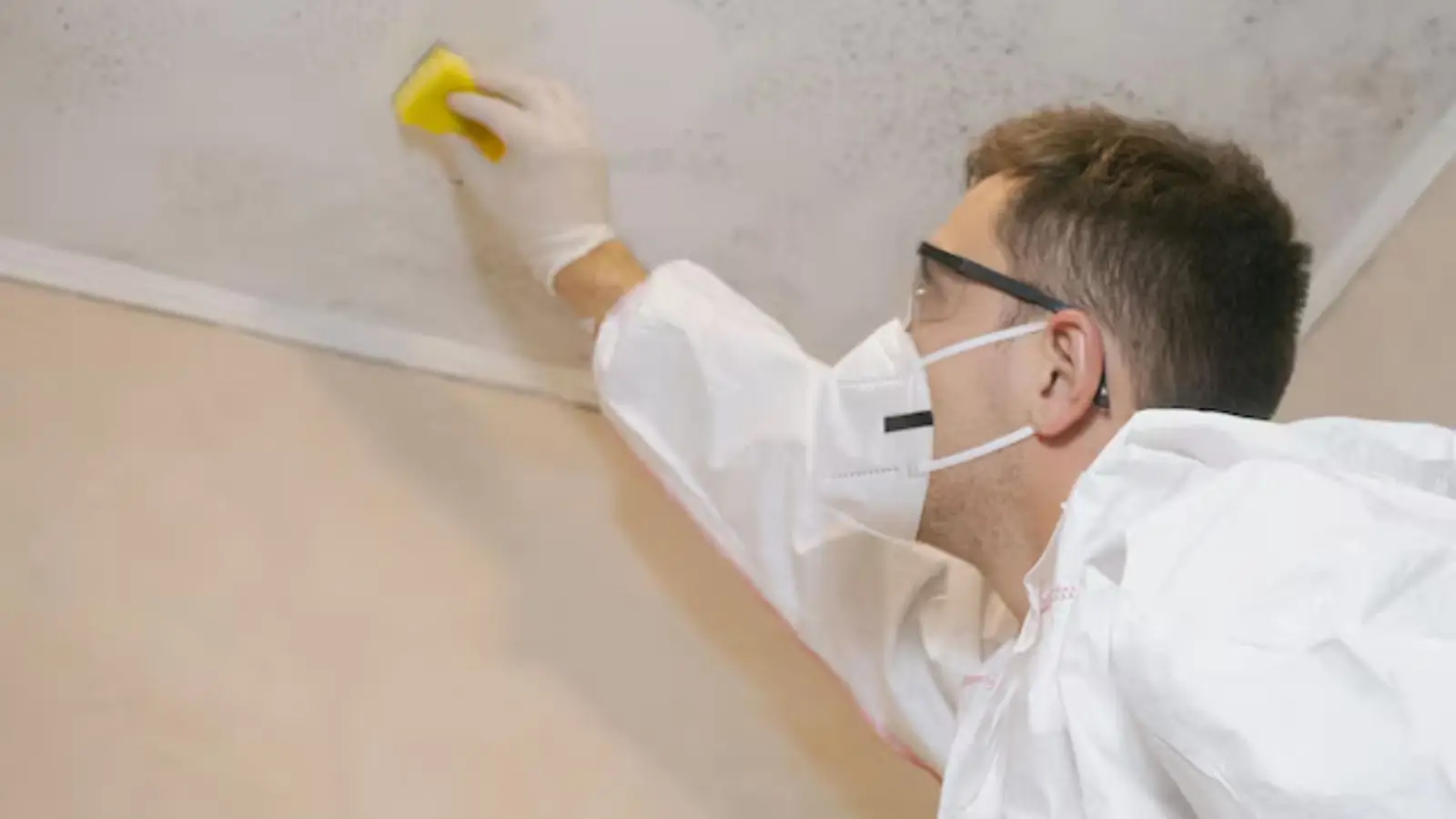
Staring at a dark spot in a Laguna Woods, CA bathroom and wondering whether it is black mold or mildew? The label matters less than where the spot is, how big it is and why it is wet. Black mold usually means a dark or greenish-black growth, and mildew is a looser word for mold on a damp surface.
The sections below show how the agencies use the two words. A decision table then turns what you see into a next step, so you can tell a quick cleaning job from a moisture problem that needs a report or a call.
Three agencies, three uses of the word
The EPA says mildew refers to certain kinds of mold or fungus, and that it typically appears in damp places such as showers and window ledges. FEMA's mold brochure for flood recovery calls it mildew, mold in an early stage. So both treat mildew as mold, not as something safer or different.
The CDC and the California Department of Public Health take a step further. Both say the type of mold does not change what you do about it, and neither recommends testing to find out. The CDC says all molds should be treated the same with respect to potential health risks and removal.
What that means in practice
You do not need a lab to choose a next step. You need three answers: how big is it, what is it growing on and where is the water coming from? The rest of this page is built around those questions.
A decision table for what you see
| What you see | Likely meaning | What to do |
|---|---|---|
| Gray or black film on shower caulk or grout that wipes away | Surface growth from regular wet and dry cycles | Scrub with detergent and water, dry and improve ventilation |
| Dark spots on a bathroom ceiling that return within weeks | Steam is lingering or a fan is weak | Clean, run the fan longer, test its airflow and watch the spot |
| Patch larger than about 10 square feet | Established growth with moisture feeding it | The EPA advises professional help |
| Spots on a wall with a soft, bubbled or stained surface | Water inside the material, possibly a leak | Find the source and call a professional if the drywall is wet |
| Musty smell with no visible growth | Moisture where you cannot see it, such as a wall cavity | Look for leaks, check humidity and call if you cannot find the source |
| Growth on cardboard, carpet or ceiling tile | Porous material that has been wet | The EPA says these may have to be thrown away |
No row asks you to identify a species. That is deliberate. The California Department of Public Health says there is no evidence that the particular kind of mold matters for what you do, and the CDC does not recommend testing.
Table says call a professional?
Describe the spot to the 24/7 line. We can tell you whether it sounds like a surface job or a moisture problem.
Why color does not settle it
The CDC describes Stachybotrys chartarum as a greenish-black mold, which is where the name black mold comes from. But many molds look dark, and many can look black, green or gray depending on age and surface. A color on its own does not tell you what the growth is.
That is also why home test kits and swabs rarely help. A result tells you the species, and the plan remains the same: dry the area and remove the growth. If you need documentation for a lender or a real estate matter, ask what the other party requires.
Cleaning the surface kind
For a small area on a hard surface, the EPA says to scrub the mold off with detergent and water and dry the area completely. The EPA says areas of about 10 square feet or less can often be handled by the household. The CDC says bleach can be used in limited amounts, while the California Department of Public Health does not recommend it, so detergent is the safer common ground.
If a spot returns after cleaning, treat that as the real finding. A recurring patch means the moisture source is still there, and cleaning again will not solve it. Consider the humidity too, since the EPA advises keeping it below 60 percent, ideally between 30 and 50 percent.
Dark spots on shower caulk or a ceiling in the Village
Laguna Woods Village buildings date from 1963 to 1985, according to the Village's own community information. Original tubs, caulk lines and exhaust fans in buildings that age can be worn, so black spots at a shower seam may signal caulk at the end of its life. If the spots are limited to caulk, replacing it is usually a maintenance job.
A bathroom ceiling stain, a soft wall or a repeating patch is a moisture issue worth reporting. Resident Services at 949-597-4600 is the number the Village lists for leaks in manors. Ask them whether the source falls on you or the mutual, because mutuals differ and we cannot decide that for you.
Source type: community association document, city website
Why the distinction still helps a little
If the label does not change the cleanup, why bother with it? Because the words tend to signal scale. Someone who says mildew is usually describing a thin film in a wet room, while someone who says black mold is usually describing a patch that has spread or keeps coming back. Those descriptions point to different amounts of moisture.
Use the words as a rough size gauge, nothing more. A film at the shower that wipes off has probably been wet and dry in cycles. A dark patch on a ceiling or wall has probably been damp for longer, and that is the pattern the EPA ties to its 10 square foot guide for when to bring in help.
Write down what you see before you clean. Note the room, the size, the surface and the date, and take a photo. That record helps if you need to report a leak, talk to your insurer or compare the patch against what it looks like a month from now.
When it is time to call
Call a professional when the area is larger than the EPA's 10 square foot guide, when drywall is soft or wet, when sewage was involved or when you cannot find the water. Our mold remediation page explains how crews contain and remove growth, and water mitigation covers drying a structure after a leak. The industry standard for professional mold work is ANSI/IICRC S520.
Nearby, the Lake Forest and Laguna Hills pages explain how we serve neighboring cities. Health questions belong to your physician, and we do not diagnose.
Common questions
The EPA says mildew refers to certain kinds of mold or fungus and usually appears in damp places such as showers. FEMA's brochure describes it as mold in an early stage.
The CDC says all molds should be treated the same with respect to potential health risks and removal. For health questions, ask a physician.
The CDC does not recommend mold testing, and the California Department of Public Health does not recommend it either. The type does not change the cleanup.
Spots limited to caulk that wipe away can be cleaned with detergent and water. A ceiling patch that returns, or that sits on soft or stained material, points to moisture. Report suspected leaks to Resident Services at 949-597-4600.
The EPA says about 10 square feet or less can often be handled by the household. Larger areas, sewage damage or significant water damage call for a professional.