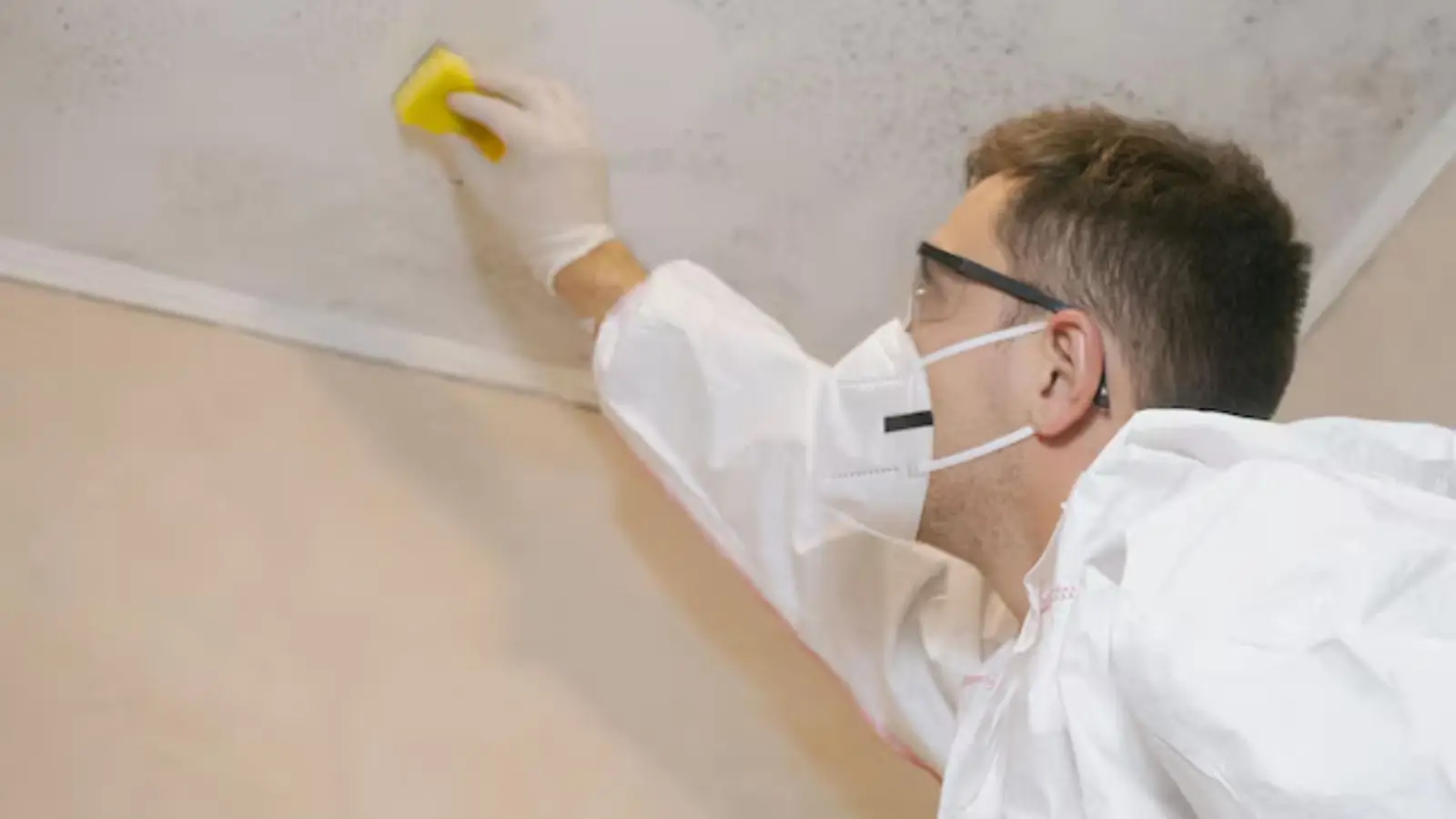
Black mold on a bathroom ceiling in Laguna Woods, CA, is mold growth that has taken hold on the paint or drywall above a shower or tub. It is common because a bathroom produces steam every day and a ceiling is the coolest, least ventilated surface in the room. The growth tells you moisture has been sitting there longer than the room can dry it.
This guide walks through the three usual causes, the difference between a surface film and a real problem and how to clean and fix a small patch. It also covers what to do about the fan, which is usually the heart of the matter.
Why bathroom ceilings get mold
Steam with nowhere to go
A hot shower fills the room with water vapor. The vapor settles on the ceiling, and if the ceiling stays damp, mold can grow.
A weak or failing exhaust fan
A fan that is clogged, slow or ducted poorly leaves moisture in the room. Hold a tissue up to the grille and see whether it clings.
A leak from above
A pipe, a roof penetration or a neighbor's bathroom overhead can feed a ceiling from the other side. Patches that darken after rain or at odd times are suspects.
The EPA is blunt about the root cause. The key to mold control is moisture control, and mold will not grow without moisture. That is why the fan and the source matter more than the cleaner you pick.
Mildew at the shower or mold on the ceiling?
The EPA says mildew refers to certain kinds of mold or fungus and usually shows up in damp places such as showers and window ledges. So a gray or dark film on a tile line or a caulk joint is often called mildew. A spot that has spread across the ceiling is the same family of problem, only with more moisture behind it.
The size and location matter more than the name. A small surface film that wipes away is one situation. A ceiling patch that comes back within weeks, or that is soft, bubbled or stained brown around the edges, is another.
What the CDC says about greenish-black mold
People search for black mold because of one species, Stachybotrys chartarum, which the CDC describes as a greenish-black mold. The CDC also says all molds should be treated the same with respect to potential health risks and removal. In practice, a black patch does not change the plan: stop the moisture, then remove the mold.
The CDC does not recommend testing for mold, and the California Department of Public Health says the particular kind of mold does not matter for what you do next. Any mold you can see or smell should be fixed. Health questions about exposure belong to a physician, and we do not diagnose.
Spots coming back after cleaning?
A returning patch often means the moisture source is still active. Call the 24/7 line and describe it.
Fix the fan and the moisture first
Run the fan longer
Leave the exhaust fan on during the shower and for a while after. Moisture needs time to leave the room.
Test the airflow
A tissue held to the grille should be pulled flat against it. If it drops, the fan or duct may be blocked or weak.
Check for a source above
Look at the ceiling on the other side of the wall. A stain that grows with no steam involved suggests a leak.
Wipe the shower down
Wipe water from walls and the tub edge after use so the room starts dry the next day.
A fan that moves little air should be repaired or replaced by someone qualified, and if the duct runs through a roof or attic space you do not control, see the local note below. Plumbing leaks need a plumber. Once the source is handled, water damage repair can replace ceiling drywall that stayed wet too long.
Cleaning a small ceiling patch
The EPA says an area of about 10 square feet or less, roughly three feet by three feet, can often be handled by the household. Scrub it with detergent and water, and dry the area completely. Painted drywall is a bit porous, so if the paint is bubbling or the board feels soft, cleaning will not be enough.
Do not paint over mold. The EPA says not to paint or caulk over it, and mold under a fresh coat will keep growing as long as the moisture is there. Wait until the ceiling is fully dry, then repaint after the surface is clean. For patches over 10 square feet, ceiling material that stays wet or any sign of a leak above, call a professional. Our mold remediation page explains what that work involves.
What a professional looks at
A crew that comes for a bathroom ceiling does not start with a spray bottle. It starts with a moisture meter, which reads how wet the drywall is, and often a thermal camera that shows cooler, damp areas behind a painted surface. The goal is to learn whether the ceiling is wet from steam, from a leak or from both.
If the board is wet inside, it is usually cut out, because paint and cleaner cannot dry it from within. The area is then dried and the ceiling is rebuilt. The cost depends on the size of the patch, how much material is removed, whether a leak has to be traced and how long drying takes, so no responsible web page can give you a number in advance.
Bathroom ceilings and fans in the Village
Laguna Woods Village buildings were built in phases between 1963 and 1985, and the Village describes second- and third-floor manors in its bulletins. In a building that old, original exhaust fans and ducts may be due for a check, and a ceiling can sit directly below another unit's bathroom. So a stain on your ceiling may come from your steam or from above.
Fan ducts in many buildings run through roof or attic space, and who maintains that space depends on your mutual and the building. Ask Resident Services at 949-597-4600 whether the fan duct and the space above your ceiling are yours or the mutual's, and check your mutual's published policy. Do not assume, because mutuals differ, and report any suspected leak from above there too.
Source type: community association document, city website
The California Department of Insurance advises contacting your claims adjuster if you suspect mold after a leak, and says mold is not usually covered by a standard policy. If the cause is a sudden leak, ask your insurer before cleanup so you do not remove evidence. Photograph the ceiling first.
Neighboring pages for Aliso Viejo and Laguna Beach cover similar ceiling and fan problems for homes outside the Village.
Common questions
The CDC says all molds should be treated the same with respect to potential health risks and removal, and the California Department of Public Health says any mold you see or smell should be fixed. For health questions, ask a physician.
No. The EPA says not to paint or caulk over mold. Clean it, find and fix the moisture source, dry the area fully and then paint.
The EPA says about 10 square feet or less can often be handled by the household. Bigger areas, soft drywall or a suspected leak above call for a professional.
A working exhaust fan removes steam, which stops a common cause. If the patch is also fed by a leak, the fan alone will not fix it.
Ask Resident Services at 949-597-4600 and check your mutual's policy. We cannot say which party is responsible, because that depends on the building and the mutual.