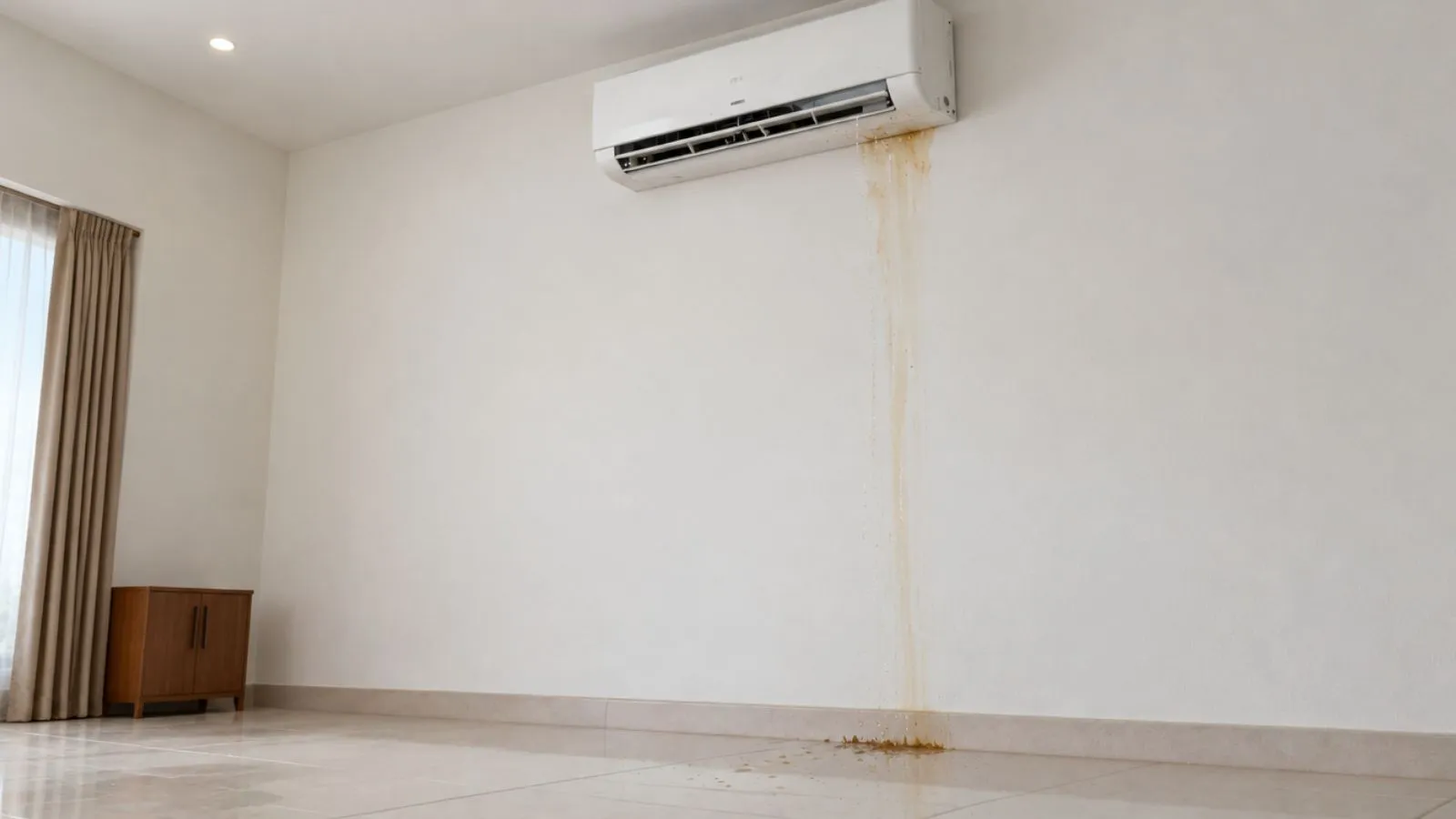
AC leak water damage is moisture damage caused by an air conditioner or heat pump releasing water where it should not go. Cooling equipment pulls water out of the air as it runs, and that condensate has to leave through a drain line. In Laguna Woods, CA, when that line clogs or a pan overflows, the water goes into the ceiling, wall or floor around the equipment.
Call (949) 670-0939 for the water damage. We extract the water, dry the materials and repair drywall and paint. We do not repair air conditioners, so an HVAC technician has to fix the unit, and the leak keeps returning until they do.
Where AC water comes from
Clogged condensate drain line
Algae and debris build up in the drain pipe, and the water backs up into the pan and then over its edge.
Overflowing drain pan
A rusted or cracked pan, or a full one, spills onto the ceiling below an attic air handler or onto a closet floor.
Frozen evaporator coil
Low airflow or a dirty filter can ice up the coil. When it melts, more water arrives than the pan can handle.
Ductless mini-split drip
A wall unit with a blocked drain or a tilted body drips down the wall and stains the paint and baseboard.
Air handler in a closet or attic
These sit above living space or against walls, so a small leak reaches drywall quickly.
Why AC leaks show up in the warm season
Laguna Woods has a dry coastal-inland climate, and the air conditioner runs mostly in the long warm season. NOAA's 1991 to 2020 climate normals for the nearest long-record station, Santa Ana John Wayne Airport, show 11.18 inches of precipitation a year. That station is not in Laguna Woods itself, so use it as a regional guide only.
Rain is rare in summer, with June, July and August each averaging well under a tenth of an inch at that station. A ceiling stain that appears then points to plumbing or air conditioning, not weather. Look at the thermostat and the air handler first, then call a plumber if the unit is dry.
Safety steps when an AC unit is leaking
- Turn the AC off at the thermostat, then switch off power to the unit at the breaker before you touch wet equipment.
- Never stand in water near the air handler, outlets or the electrical disconnect. Call 911 if you feel a shock risk, see sparks or smell burning.
- Place a bucket under the drip and move furniture and electronics away from the wet zone.
- Photograph the unit, the drain line, the pan and the stain, with the date visible.
- In Laguna Woods Village, report the leak to Resident Services at 949-597-4600 and ask which party handles the equipment.
- Call an HVAC technician to stop the source. Do not run the system again until it is checked.
What AC water does to your home
Condensate is usually clean at first, but standing water in a drain pan can grow slime and smell. It soaks into the paper face of drywall and into insulation, then spreads along the surface of the ceiling. Left in place, damp drywall can support mold growth, because the EPA says mold needs moisture to grow.
A slow drip is easy to miss. A closet air handler may leak for weeks behind a door or inside a wall. Check the floor around the unit and the wall behind it for soft spots, bubbling paint or a musty smell.
Our drying and repair process
Confirm the source is off
The AC stays off until an HVAC technician clears it, so we are not drying with a leak still running.
Find the wet area
A moisture meter and a thermal camera map the wet drywall, insulation and flooring, including areas that look dry.
Extract and open up
Extraction wands remove standing water, and saturated drywall or insulation is cut out so the cavity can dry.
Dry the structure
Air movers and dehumidifiers run until readings match dry reference points, using ANSI/IICRC S500 as the industry reference.
Repair the finish
Drywall, texture and paint are replaced and blended once the framing is dry.
| What you see | Likely cause | Who to call |
|---|---|---|
| Drip under an attic air handler | Clogged drain line or overflowing pan | HVAC technician for the unit, us for the ceiling |
| Stain beside a mini-split | Blocked drain or unit not level | HVAC technician, then us for the wall |
| Ice on the indoor coil | Dirty filter or low airflow | HVAC technician |
| Water in the closet around the unit | Condensate overflow | HVAC technician and us for flooring and drywall |
| Stain in summer with dry air unit | Plumbing leak | A plumber, and us for the drying |
Water on the ceiling from your AC?
Call the 24/7 line. A crew can be dispatched the same day when available.
What affects the cost of AC leak water damage repair
- How long the leak ran. A slow drip over weeks soaks deeper than a one-day overflow.
- Where the unit sits. Attic and closet units put water into ceilings, walls and floors, and each needs its own steps.
- Materials affected. Drywall, insulation, carpet and cabinetry are handled differently.
- Size of the wet area. More square footage means more drying equipment and more time.
- Finish matching. Texture and paint that must blend with the room add repair steps.
Want your real number? Call (949) 670-0939. Scope and price are explained before work starts.
Insurance is worth a short, general note. California's Department of Insurance says homeowners policies do not cover flood damage but do cover other kinds of water damage, and coverage depends on the cause. Sudden and accidental water damage is often covered, while slow leaks and neglect often are not, and flood usually needs its own policy. Check your policy or ask your insurer, because we cannot promise how any claim will be decided.
A sudden overflow is often treated differently from a leak that dripped for months. Many policies exclude damage from long-term seepage or poor maintenance, so check your policy and ask your insurer. Keep the HVAC technician's invoice, since it can show when and why the leak started.
Prevent the next leak
Schedule HVAC service
A technician can clear the condensate line, check the pan and test the float switch before the warm season.
Change filters
A dirty filter restricts airflow and can ice the coil, which melts into the pan.
Add a pan alarm
A water sensor in the drain pan warns you before it reaches the ceiling.
Check the drain end
Look for dripping at the outdoor termination. Water there means the line is moving.
Air conditioning leaks in Laguna Woods homes
According to NOAA climate normals, the nearest long-record station at Santa Ana John Wayne Airport averages 11.18 inches of precipitation a year. Rain is rare in summer, so a ceiling stain in the warm months points to plumbing or air conditioning. Inspect the unit and the drain line before blaming the roof.
The City of Laguna Woods utility providers page names Southern California Edison as the electricity provider. Turn off the AC at the thermostat and power at the unit before touching wet equipment, and call 911 if there is any shock risk. Do not wait for utility help for a water problem.
Laguna Woods Village was built between 1963 and 1985, according to a community association information sheet, so older buildings often have older air handlers and drain runs. Ask Resident Services at 949-597-4600 which party maintains the equipment, because mutuals differ. The Third Mutual damage restoration policy also lists excess humidity and slab or wall leaks among its causes, so confirm with Resident Services who pays.
Source type: city website, community association document, NOAA climate normals
Where we work nearby
We also serve neighbors in Aliso Viejo and Lake Forest. After the unit is fixed, see water damage cleanup for the wet-materials side and water damage repair for the rebuild.
AC leak water damage service map for Laguna Woods
Common questions
Yes. The line is open 24/7. Same-day response is offered when crews are available.
No. We handle the water damage side: extraction, drying, drywall and paint repair. An HVAC technician fixes the unit, and the leak keeps returning until they do.
Common causes are a clogged condensate drain line, an overflowing drain pan or a frozen evaporator coil that melts. A ductless mini-split can also drip if its drain is blocked.
Probably not. Rain is rare in summer in this area, according to NOAA normals, so a summer stain more likely comes from plumbing or the air conditioner.
It depends on the cause and on your mutual's policy. Third Mutual's damage restoration policy lists excess humidity and slab or wall leaks among causes, so confirm with Resident Services and your own insurer.